
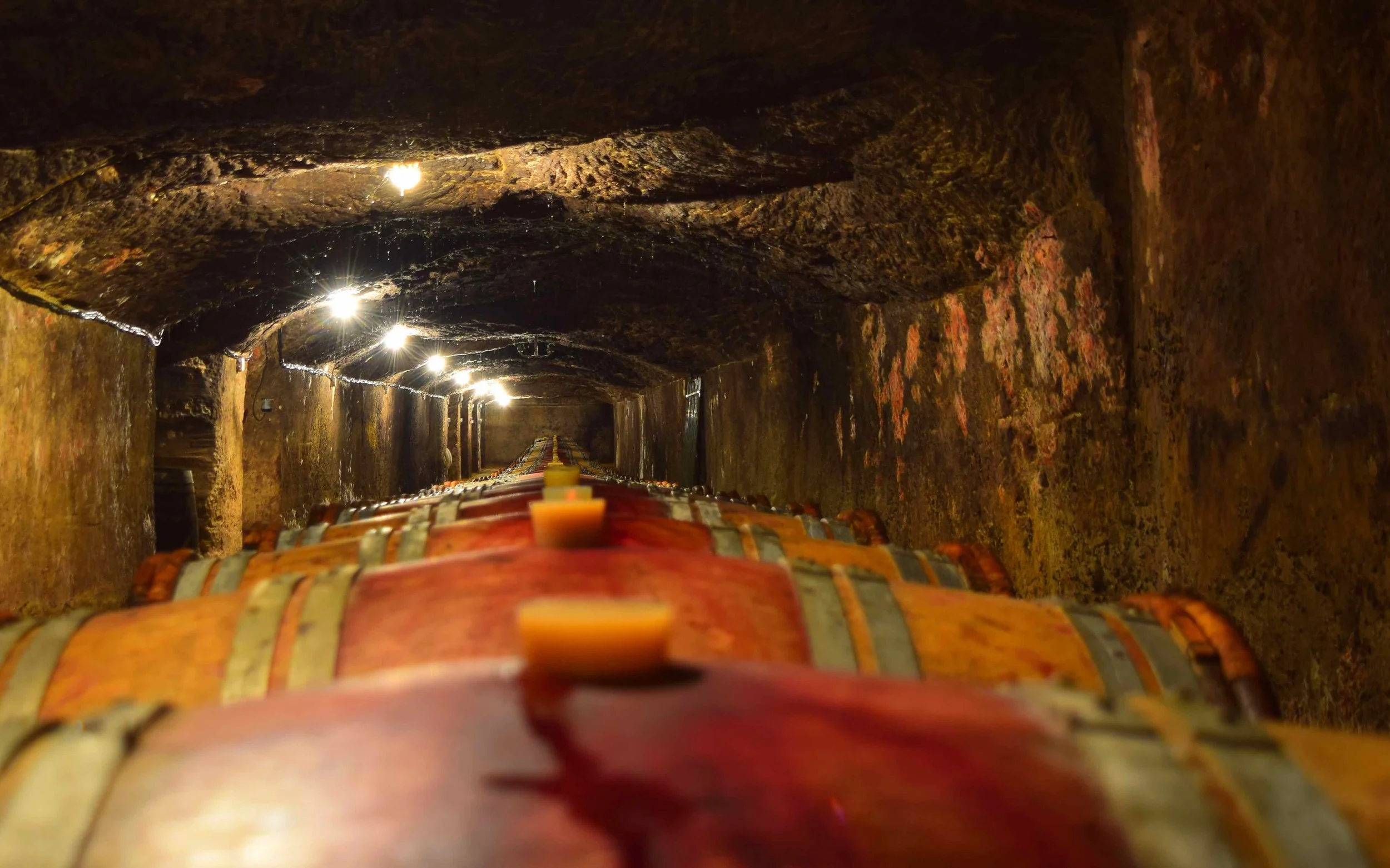
Clos Rougeard Loire Valley, France.
Established: 1664 (in 2017 purchased by Bouygues family)
Appellations:
AOC Saumur
AOC Saumur Champigny
Proprietor: The Bouygues Family
Winemaker: Cyril Chirouze (Pierre Graffeuille - director)
Wine Making Overview: Hand harvest from maximum 6 bunches per vine with hand sorting then second sorting on table de trie before de-stemming. Natural yeast ferments with minimal SO2 (final around 25 mg/l). Gentle pumping over with maceration lasting 21-28 days with malo in barrel and elevage for 24 months including racking 3 or 4 times. Wines are fined with egg whites if necessary, not filtered. Ageing in bottle for another 24 months before release.
Average Production: 45000 bts/year
Viticulture: Certified Organic
Vegan Friendly: no
Vineyard Area: 15 ha total
13.5 hectares Cabernet Franc in Saumur Champigny
1.5 hectare Chenin Blanc in Brézé
Vineyards:
Saumur-Champigny Le Bourg 3.0 ha
Saumur-Champigny Les Poyeux 4.3 ha
Saumur-Champigny - 15 plots for Le Clos in 3 communes in Chacé, Varrains and Dampierre-sur-Loire 6.2 ha
Saumur Blanc Brézé 1.5 ha
Vine Density: 6000 vines / hectare
“For me, the wines of Clos Rougeard are clearly the best in Saumur-Champigny. Indeed, they are the best red wines made in the entire Loire Valley.”
“The Bouygues family has no intention to expand either the range or the modest holdings; the laissez-faire approach that underwrites the winemaking so successfully, looks set to preserve the overall framework. This is refreshing, especially when one considers the demand for these wines”
After 14 generations of continuous ownership (from 1664) passed down through successive generations by the one family this small 10 ha estate has changed ownership following the death of one of the two Foucault brothers. Charly (Jean-Louis) Foucault, who was responsible for both the vineyard work and the wine-making, passed away in late December 2015 and following a long and difficult process the domaine is now owned by one of France’s wealthiest families, the Bouygues. The Bouygues family own several food and wine related interests including Château Montrose in St Estephe and Château Tronquoy Lalande in Bordeaux and other wine properties in Burgundy with the acquisition of 51% of the bio-dynamically farmed Henri Rebourseau domaine based in Gevrey Chambertin, not to mention a truffle farm Chinon and a distillerie in Cognac.
To say that this property has become a cult estate is an understatement with sommeliers and restaurants the world over clambering to buy the wines or visit the estate, an almost impossible task to arrange even for us as the importers. The Foucault family had been quietly producing tiny quantities of wines from the same small plots of vines in Saumur and Saumur Champigny that the family owned and farmed for generations, with the notable exception of the purchase in 1993 of 1 hectare of very old vines in Brézé. Perhaps it was the addition of this tiny plot of ancient vines on the east facing slope of this historically great terroir of Brézé that has bought the worlds attention to this estate, such is the beauty and rarity of this wine.
Farming organically without the use of modern fertilisers and systemic chemicals and replanting with massale selection of vines and giving the wines very long ageing in barrels and then also in bottle before releasing each new vintage ensured that the wines would show their best upon release. Not only was it this ‘slow wine’ method of production that had appeal, but very simply these wines are among the greatest to be found in France. These are wines of rare breed and texture and complexity for the white Brézé (which, with age, is often compared to great white Burgundies) and also for the small 1 ha patch of very old Cabernet Franc vines located in Chacé that makes the iconic ‘Le Bourg’ red. Just 4000 bottles are produced of each of these 2 wines in a good year - and the demand from wine lovers around the world is enormous.
Here the cellars remain the same, the exact type of oak for each cuvee remains the same, two vintages lay resting in bottles deep underground in these very cool damp cellars waiting for release and two vintages in barrel remain stylistically identical to the earlier vintages although these younger vintages shocked me with just how well they were showing at this early stage. If anything the 2017 + 2018 vintages appear to even more impressive, which is perhaps not surprising as there is little doubt that the wines at this estate have progressed and gained in clarity and depth in the last 2 decades. So the progress continues under new ownership who are fully committed to bio-dynamic viticulture not only at this estate but also at their other wine estates.
In April 2019 I drove through the hillside of Brézé with Arnaud Lambert stopping beside the extremely old Chenin blanc vines of Clos Rougeard, Arnaud owns a plot beside these large 100+ year old vines, and what was notable was that the missing dead vines had now been replanted and those few rows owned by Clos Rougeard appeared absolutely immaculate. So yes there has been small change with replacing dead vines and no doubt other small details will be attended to all in the same spirit and care as before by the new owners who certainly do not lack the means to ensure that this iconic estate remains at the every top, not only of Saumur, but also among the greatest estates in the Loire and indeed all of France.
The leading cuvée of Saumur-Champigny produced since 1988 here is Le Bourg, which originally came from a 1 hectare plot of mostly 75 to 95 year-old Cabernet Franc vines planted on soils comprised of a thin layer of clay over limestone sub-soil beside the Foucault family house in the centre of Chacé. After the frost of 1991 a proportion of the vineyard needed replanting so there are also some younger vines which were replanted then. These are the vines that lie directly behind the courtyard and its anonymous gateway in the village of Chacé. There is also Les Poyeux, from a more distant 2.9 ha plot of 40-70+ year-old vines on more sandy soils, and finally for the reds there is the domaine Saumur-Champigny which on the wine cartons says Clos but is not labelled as Clos. This is produced from a blend of ten other plots of vines totalling about 4.5 ha covering 3 communes of Chacé, Varrains and Dampierre-sur-Loire. Vine age here varies from 30 years old to more than 90 years.
If these wines are not sufficiently esoteric there is also a white Saumur named Brézé, which comes from the village and hill of the same name, made naturally from 100% Chenin Blanc, in miniscule quantities from 1 hectare of 100+ year old vines which was purchased in 1993 on the famed hill of Brézé. This wine is simply in a class of its own, a wine of rare dimension. Less well known is that there are also some chenin blanc vines in Les Poyeux and it is these vines that have produced the very occassional and very rare Coteaux de Saumur sweet white - most recently in 1989, 1990 + 1995 while the 1921 is recalled by a privileged few to remain amongst the greatest wines they have ever tasted.
“Brézé is on the rise, today producing some of the most arrestingly mineral, intense Chenin Blanc on the planet. For at least 500 years, these vines produced some of the most profound wines of France. They were regularly exchanged, barrel for barrel, with Chateau d’Yquem, the nectar like sweet wine from Bordeaux that sells for thousands of dollars a bottle. They were a favourite at Versailles under the Sun King, Louis XIV. Today, out of 400 hectares (980 acres), only 4 producers are bottling wines as Brézé, accounting for about 10% of the vineyard area. Arnaud Lambert has 21 hectares, and makes stunning single vineyard whites from Clos du Midi, Clos David and Clos de la Rue and Bourguenne. These are precise crystal sharp wines in their youth, with enough snap to shock the tongue, but still posses the weight and resonance to expand and slightly soften with age. The reds come from Clos de L’Etoile and Clos Mazurique. While differences in each vineyard lead to wines of distinctive character, Lambert’s style arcs toward grace. His wines are stripped down and elemental, ripped with acidity and verve. They plug into the electricity of Brézé’s limestone soils.” Rajat Parr, The Sommeliers Atlas of Taste
The Clos Rougeard vineyards are planted to a density of 6000 vines per hectare and have been tended without herbicides or fertilisers, with the plough being an important method of weed control. Yields have been kept low pruned using the Guyot simple method and kept to a maximum of 6 bunches per vine resulting yields that usually come in at less than 40 hl/ha. After harvest by hand, the fruit is de-stemmed and fermented in barrel with the cap submerged by foot or by pumping over. The reds undergo malolactic fermentation in barrel, with Le Bourg going into 80% new oak (previously 100% new oak in the hands of the Foucault family), Les Poyeux in used one-year-old barrels (from Montrose, Figeac and other top Bordeaux estates) and the red Clos in older wood again. There is no fining and no filtration, minimal use of sulphur, and the wine is bottled after 18-24 months in oak so that after 2 winters of ageing in barrel the wines are very stable. The end result is, particularly in Les Poyeux and Le Bourg, a wine that stands apart from the traditional view of Saumur-Champigny as a light red for quaffing in Parisian bistros. There is a substance to the Rougeard wines that suggests they deserve more than that, but more importantly there is a textural quality to them, a silkiness to the tannins, that demands attention.
These are subtle wines, wines that do not assault the palate, but seek to impress on grounds of their elegant composition rather than forceful flavour or aroma. They are truly stunning wines.
With a new winemaker, Cyril Chirouze, installed in time for the 2023 vintage it looks clear that he is taking Clos Rougeard to another level with immensely impressive wines from the more challenging 2023 vintage. Incredibly fine fresh polished wines that show remarkable clarity and finesse on succulent old vine intensity. These will be worth waiting for.
The wines of Clos Rougeard have to be experienced once in any wine drinker’s life, and despite the ever-rising prices I will do my best, bank manager permitting, to continue to add them to my cellar, even if it is just one or two bottles. Chris Kissack, thewinedoctor.com
2020 vintage - due 2026
Saumur blanc Brézé 2020 - allocation
”The white wine, Brézé, is located in the eponymous village and covers 1.5ha (3.7 acres), its soil, as observed, more influenced by clay. The wine is aged in barrels made by the cooper who also provides for Le Bourg, this time for a year only, with only 30% of the oak new. All the bottled wine is aged thereafter before commercial release” worldoffinewine.com
The vines for this cuvee all come from the lieu-dit Bourguenne, generally regarding as the best east facing slope of Breze which favours freshness (just 13% alc in 2020) and the always present underlying acidity from this exceptional terroir. Clos Rougeard bought their plot of then very old vines in 1993, so some vines are now approacing 100 years age.
The 2020 Brézé will impress both white Burgundy lovers and Loire Chenin fans. This mid-weight style offers 30% new oak, resulting in notes of grilled nuts and fine toast. It has a distinctive and youthful personality, with smoky, toasty layers meeting ripe pineapple flavors. The 2020 presents a round yet compact mid-palate as bright, tangy acidity from the terroir leads to a nice salty note. Having tasted the 2005 just days before, I can see this going strong for at least another 15 years. 93/100 Rebecca Gibb MW, Vinous Media, July 2024
Saumur-Champigny rouge (Clos) 2020 - allocation
The 2020 Saumur Champigny is super succulent and already welcoming despite its release date being almost a year away from tasting. What's good about this is its elegance and balance despite the warmth of the vintage, leaving you wanting more. Alongside pure fruit, smoky bacon and black tea, this is starting to show some subtle signs of savoriness and tobacco. The nature of the fine tannins is all-encompassing. While it may not be the longest wine in the world, the 2020 retains a sense of finesse and poise.
92/100 Rebecca Gibb MW, Vinous Media, August 2025
Saumur-Champigny rouge Les Poyeux 2020 - allocation
The 2020 Les Poyeux elegantly fills the mouth like an arch. It's not a big wine despite the warmth of the year, nor is it warm. This is serious and not overdone. It’s supple, ripe and gentle with some savory earthiness joining the cedary, tobacco-like oak. A few rains before harvest have ensured that it didn't become too concentrated. The 2020 is rounded and ripe, and its tannins offer the finest of grains. This is gentle, satisfying and balanced.
94/100 Rebecca Gibb MW, Vinous Media, August 2025
Saumur-Champigny rouge Le Bourg 2020 - allocation
The 2020 Le Bourg is a baby. This is not due to be released until March 2026 and you can see why: it is far too young. The 2020 provides the flavor of a big wine, but it's not a big wine, remaining just short of medium-bodied. It sports intense concentration and richness, offering classical scents of smoky bacon and coffee grounds alongside dark fruit with a hint of balsamic. There's an abundance and richness to the tannins that hold and coat the mouth. The 2020 is scented and long but needs time to come around.
(95-97)/100 Rebecca Gibb MW, Vinous Media, June 2022